

Welcome to Amanda's NICU Education



RNC-NIC Exam Prep & NICU Education for Nurses
I'm Amanda, a neonatal Clinical Nurse Specialist, NICU educator, and NICU nurse who's been caring for critically ill newborns since 2009.
I currently work as a Clinical Nurse Specialist in a Level IV NICU in Los Angeles, where I support neonatal nurses, providers, and families through education, evidence-based practice, and clinical expertise.
I created Amanda's NICU Ed to make high-quality NICU education more approachable and to help nurses feel more confident at the bedside and prepared for the RNC-NIC exam.
NICU Education for Nurses at Every Stage
Whether you're preparing for the RNC-NIC, starting your career in the NICU, or looking to strengthen your neonatal nursing knowledge, Amanda's NICU Ed provides practical, evidence-based education designed specifically for NICU nurses.

RNC-NIC Exam Prep
Prepare for the RNC-NIC with focused review materials, study resources, and practical test-taking strategies.

NICU Education
Build your knowledge and confidence with approachable education covering the concepts NICU nurses use every day.

NICU Resources
Find study guides, books, free resources, and educational content to support your growth as a neonatal nurse.

Not very many people love taking tests but as a self-acclaimed "forever student" who has taken (and passed) five different certification exams I am no longer afraid of tests! "Way to brag", you might be thinking but I want to help YOU pass your certification exam too!
Introducing Amanda's RNC-NIC Success digital course - your ultimate study companion!
Gain unlimited, on-demand access for life, ensuring you're primed to ace your certification exam.
I'm here to help you succeed and I can't wait for you to share with me that you PASSED the RNC-NIC EXAM!!!

Neonatal Code Meds
Neonatal Code Medications: Moving Beyond Memorization to Physiology
Every NICU nurse remembers their first code.
The room suddenly fills with people. Someone starts chest compressions. Another nurse grabs the code cart. The respiratory therapist provides ventilation. A physician asks for epinephrine. Another calls for calcium. Someone else asks for bicarb.
In the midst of the organized chaos, it's easy to become task-focused… drawing up medications, documenting times, and handing supplies to the team.
But one of the most valuable things a NICU nurse can do during a resuscitation is understand why each medication is being given.
When you understand the physiology behind these medications, you can anticipate the next steps, recognize potential complications, and become a more confident member of the resuscitation team.
Let's review the medications you should know during neonatal resuscitation beyond the delivery room.
First Things First: Medications Don't Save Babies
This might sound surprising, but medications are not the most important part of neonatal resuscitation.
Effective ventilation is.
Unlike adults, most neonatal cardiac arrests occur because of progressive respiratory failure or inadequate oxygen delivery. Not because of a primary cardiac problem. If a baby isn't moving air, the myocardium isn't receiving oxygen. Without oxygen, the heart rate slows, cardiac output falls, and eventually cardiac arrest occurs.
That's why the first priorities during every neonatal resuscitation are:
Establish an effective airway. Provide adequate ventilation. Correct problems with ventilation (tube position, obstruction, pneumothorax, equipment failure). Begin high-quality chest compressions when indicated.
Only after these fundamentals are in place do medications become helpful.
Think of medications as tools that support resuscitation (not substitutes for it).
Epinephrine: Improving Blood Flow to the Heart
If there is one medication every NICU nurse should understand during a code, it's epinephrine.
When is epinephrine indicated?
According to the 2025 Neonatal Resuscitation Guidelines, epinephrine should be administered when the heart rate remains less than 60 beats per minute despite effective ventilation, coordinated chest compressions, and correction of reversible causes. Intravenous administration is preferred, while endotracheal epinephrine may be considered while vascular access is being obtained. Keep in mind, these guidelines are specific for resuscitation in the delivery room. What if we are resuscitating in the NICU?
For newborns managed using neonatal resuscitation guidelines, endotracheal epinephrine may be considered as a temporary bridge while intravascular access is being established. However, because absorption from the lungs is slow and unpredictable, IV (typically UVC) or IO epinephrine should be obtained as rapidly as possible and remains the preferred route. For older infants managed according to pediatric resuscitation guidelines, IV or IO administration is preferred over the endotracheal route.
How does epinephrine work?
Many nurses think of epinephrine as a medication that "starts the heart."
That's only part of the story.
Its most important effect during CPR is alpha-adrenergic vasoconstriction.
By constricting peripheral blood vessels, epinephrine increases systemic vascular resistance, which raises aortic pressure during chest compressions. This improves coronary perfusion pressure, allowing more oxygenated blood to reach the myocardium.
Once the heart begins receiving oxygen again, spontaneous circulation becomes much more likely.
Epinephrine also stimulates beta-1 receptors, increasing heart rate and myocardial contractility once circulation returns.
Endotracheal vs. Intravenous Epinephrine
One question nurses commonly ask is:
"Why do we sometimes give epinephrine down the ET tube first?"
If a baby is already intubated but an umbilical venous catheter (UVC) or other vascular access has not yet been established, endotracheal epinephrine may be given while access is obtained.
However, absorption through the lungs is unpredictable. Much of the medication may remain in the airway, making this route less reliable. Because of this unreliable absorption, the endotracheal dose is higher than the IV dose: 0.1 mg/kg ET, compared to 0.01 to 0.03 mg/kg IV/IO. Don't let a code catch you giving an IV dose down the ET tube.
Once vascular access is available, intravenous epinephrine becomes the preferred route because it reaches the circulation quickly and predictably.
Nursing Considerations
During epinephrine administration, nurses should anticipate:
Continued uninterrupted chest compressions
Effective ventilation
Epinephrine may be repeated every 3–5 minutes
Verify dosing with subsequent doses
The intravascular dose range is 0.01–0.03 mg/kg (many centers start at 0.02 mg/kg as NRP guidelines recommend this for the initial dose)
Confirm concentration before drawing up: neonatal epinephrine is 0.1 mg/mL (1:10,000). Concentration mix-ups are a well-known source of medication error in codes, so this is worth a double-check every time.
A normal saline flush after IV administration (3 mL per NRP guidelines)
Precise documentation of medication timing
Following return of spontaneous circulation (ROSC), monitor closely for:
Tachycardia
Hypertension
Cardiac arrhythmias
Changes in perfusion and blood pressure
Calcium Gluconate: Not for Every Code
A quick note before we dive in: the neonatal resuscitation guidelines don't specifically address calcium administration during a code. What follows reflects pediatric advanced life support (PALS) recommendations that are commonly extrapolated to neonates, along with general neonatal clinical practice. Keep that distinction in mind if you're cross-referencing sources for the RNC or CCRN exams.
One of the biggest misconceptions in neonatal resuscitation is that every prolonged code needs calcium. Not necessarily.
Routine calcium administration during CPR has not been shown to improve outcomes.
Instead, calcium should be reserved for specific clinical situations where hypocalcemia or impaired myocardial function is suspected.
Examples include:
Severe hypocalcemia
Hyperkalemia
Massive blood transfusion with citrate toxicity
Certain inborn errors of metabolism
Why does calcium help?
Calcium plays an essential role in cardiac muscle contraction.
When ionized calcium levels become critically low, myocardial contractility decreases, making it difficult for the heart to generate an effective contraction (even after oxygen delivery has been restored).
Administering calcium corrects this deficiency and supports myocardial function when hypocalcemia is contributing to cardiovascular collapse.
Why Calcium Gluconate Instead of Calcium Chloride?
Although both medications increase serum calcium, calcium gluconate is generally preferred in neonates.
Calcium chloride delivers approximately three times more elemental calcium than calcium gluconate, making it more potent and significantly more irritating to blood vessels and surrounding tissue. Calcium chloride is more hyperosmolar and tends to be more acidic, which increases the risk of severe tissue necrosis if extravasation occurs.
Because neonatal veins are extremely fragile, calcium gluconate provides a safer option for correcting hypocalcemia while reducing the risk of a devastating extravasation injury. Whenever possible, calcium should still be administered through a secure central line and infused slowly with continuous monitoring.
Nursing Considerations
Before administration:
Confirm IV patency.
Whenever possible, administer through a central line.
Infuse slowly according to institutional guidelines.
Monitor for:
Bradycardia with rapid infusion
Cardiac rhythm changes
Extravasation
Improvement in perfusion and contractility
Never administer calcium and sodium bicarbonate through the same IV line, as precipitation can occur.
Sodium Bicarbonate: Treat the Cause, Not the Number
The same caveat applies here: sodium bicarbonate isn't addressed in the neonatal resuscitation guidelines as part of the code medication sequence. The recommendations below draw from PALS guidance and general neonatal practice around specific metabolic derangements like hyperkalemia.
Perhaps no medication creates more debate during neonatal resuscitation than sodium bicarbonate.
It's tempting to think: "The blood gas shows severe metabolic acidosis. Let's correct it."
But remember: acidosis is usually the result of poor perfusion, not the cause of it. During prolonged cardiac arrest, inadequate oxygen delivery forces cells into anaerobic metabolism, producing lactic acid. Unless circulation is restored, giving bicarbonate doesn't solve the underlying problem. Simply correcting the pH on paper doesn't reverse the arrest itself.
When might sodium bicarbonate be considered?
Routine administration during neonatal CPR is not recommended. However, it may be considered in select situations after adequate ventilation and circulation have been established, including:
Documented severe metabolic acidosis
Hyperkalemia
Certain toxicologic emergencies (rare in neonates)
Hyperkalemia: An Important Exception
One of the most important reasons NICU nurses may encounter sodium bicarbonate during a code is severe hyperkalemia.
Conditions such as:
Acute kidney injury
Extreme prematurity with impaired renal potassium excretion
Tissue breakdown
Massive hemolysis
Adrenal insufficiency
Inborn errors of metabolism
can all lead to dangerously elevated potassium levels.
Hyperkalemia alters cardiac conduction and can rapidly progress from peaked T waves and widening of the QRS complex to ventricular arrhythmias, pulseless electrical activity (PEA), or asystole.
In this setting, sodium bicarbonate helps by increasing extracellular pH, which promotes the movement of potassium back into cells, temporarily lowering the serum potassium concentration. While this can reduce the risk of arrhythmias, it does not remove potassium from the body and should be viewed as a temporary stabilizing measure rather than definitive treatment.
Remember: Hyperkalemia Requires Multiple Therapies
Sodium bicarbonate is rarely the only medication given. This next part reflects standard clinical management of hyperkalemia rather than a specific AHA resuscitation recommendation, but it's essential context for understanding why a code involving hyperkalemia often looks different from a standard code.
Depending on the infant's clinical condition, the team may also administer:
Calcium gluconate to stabilize the myocardium (does not lower serum potassium)
Insulin with dextrose to shift potassium into cells
Albuterol (institution dependent) to promote intracellular potassium uptake
Definitive therapies to remove potassium, such as diuretics, exchange transfusion, dialysis, or treatment of the underlying cause
Nursing Considerations
Administer NaHCO3 slowly.
Ensure adequate ventilation before administration because bicarbonate generates carbon dioxide.
Monitor blood gases, serum sodium, potassium, and ionized calcium.
Never administer through the same IV line as calcium-containing solutions because precipitation can occur.
Volume Expansion: Is This Baby Hypovolemic?
Not every neonatal arrest requires a fluid bolus.
In fact, routine volume expansion is not recommended unless hypovolemia is suspected.
Instead, ask: why did this baby arrest?
Situations where volume expansion may help include:
Acute blood loss
Placental or surgical hemorrhage
Internal bleeding
Severe dehydration
Significant third-spacing
In these situations, restoring circulating volume improves preload, cardiac output, and tissue perfusion.
If acute blood loss is known or strongly suspected, blood products may be more appropriate than crystalloid.
Nursing Considerations
During fluid administration, monitor:
Heart rate
Blood pressure
Capillary refill
Urine output
Oxygen requirement
Lung sounds for signs of fluid overload
In extremely premature infants, rapid volume expansion should be administered cautiously because of concerns regarding fluctuations in cerebral blood flow and the risk of intraventricular hemorrhage.
D10: The Medication That Isn't Really a "Code Med"
Not every important medication in this discussion is given during the arrest itself. Dextrose is a good example: it belongs to the postresuscitation phase, but it's just as easy to overlook as any medication on the code cart.
Why glucose matters after a code
Any infant who required prolonged ventilation, chest compressions, or epinephrine has just been through a significant hypoxic-ischemic stress. That stress burns through glycogen stores quickly, and hypoglycemia in this setting is common.
This matters because the brain runs almost entirely on glucose. An infant who has already sustained a hypoxic insult and then becomes hypoglycemic is essentially asking an already-injured brain to function without adequate fuel. The 2025 guideline is explicit on this point: newborns who receive prolonged ventilation or advanced resuscitation should have glucose checked early in the postresuscitation period and monitored until levels stay in the normal range, because both low and high glucose levels are associated with brain injury and worse outcomes following a hypoxic-ischemic insult.
This is also why glucose control matters so much in infants undergoing therapeutic hypothermia. An unstable glucose on top of an evolving hypoxic-ischemic injury is a combination worth watching closely.
Why D10 (and not something more concentrated)
Standard practice is to treat neonatal hypoglycemia with D10W, typically dosed at 2 mL/kg as an initial bolus, followed by a maintenance infusion.
The logic here is the same reasoning behind choosing calcium gluconate over calcium chloride. More concentrated dextrose solutions (D25, D50) are avoided in neonates because they're hyperosmolar and irritating to fragile neonatal veins, carry a real risk of extravasation injury, and can cause rebound hypoglycemia as insulin surges in response to the glucose spike. D10W corrects the glucose effectively while staying gentler on the infant's vasculature and glucose regulation.
Connecting it back to hyperkalemia
You've already seen dextrose once in this article (paired with insulin in the hyperkalemia bundle), where the goal isn't to correct blood sugar but to shift potassium into cells. That's a different clinical goal using the same medication, so don't let the two contexts blur together on an exam question: dextrose alone treats hypoglycemia; insulin plus dextrose treats hyperkalemia (and requires glucose monitoring afterward to prevent the insulin from dropping the blood sugar too low).
Nursing Considerations
Check a bedside glucose early in the postresuscitation period for any infant who received prolonged ventilation, chest compressions, or epinephrine.
Anticipate an order for a D10W bolus of 2mL/kg if the infant is symptomatic or significantly hypoglycemic, followed by a maintenance dextrose infusion.
Recheck glucose after treatment and continue monitoring until levels are stable in the normal range.
Confirm IV line patency and avoid peripheral infiltration. Extravasation of dextrose solutions can cause tissue injury.
Watch for rebound hypoglycemia, especially after a bolus, and coordinate the transition to a maintenance infusion.
Remember that both hypoglycemia and hyperglycemia are associated with worse outcomes after a hypoxic-ischemic event, so the goal is a normal range, not just "not low."
A Historical Pearl: Whatever Happened to Naloxone?
Many experienced NICU nurses remember when naloxone was included in neonatal resuscitation discussions.
Current NRP guidelines do not recommend naloxone as part of neonatal resuscitation.
Why? Because respiratory depression in a newborn should be treated with effective ventilation, not medication. Additionally, naloxone may precipitate acute withdrawal in infants born to mothers with opioid dependence.
The focus remains on supporting ventilation and oxygenation, the interventions most likely to improve outcomes.
The Bottom Line
When a neonatal code is called, it's natural to focus on the medications.
But medications don't reverse respiratory failure.
They don't fix an obstructed endotracheal tube.
They don't decompress a tension pneumothorax.
And they don't replace high-quality ventilation or effective chest compressions.
Instead, code medications should be viewed as physiologic tools that support resuscitation after the fundamentals are already in place.
As NICU nurses, our role extends far beyond drawing up medications. By understanding why each medication is given, when it is appropriate, and what to monitor afterward, we become better prepared to anticipate the team's next steps and provide safer, more thoughtful care during some of the most critical moments in neonatal medicine.
One last study tip: if you're prepping for RNC-NIC or CCRN-N, remember that epinephrine dosing and timing come straight from the neonatal resuscitation guidelines — know those numbers cold. Calcium, bicarbonate, and the broader hyperkalemia bundle are more likely to show up through a PALS or general critical-care lens, since they aren't part of the neonatal-specific code sequence. Knowing which guideline a fact "lives in" is often the difference between a confident answer and a guess.
Want This Kind of Breakdown for Every Topic on Your Exam?
Code medications are just one small piece of what shows up on the RNC-NIC and CCRN-N. If you found this walkthrough helpful, that's exactly the approach I take inside my certification review course.
We go topic by topic just like this: not just what to memorize, but why it matters at the bedside, so the concepts actually stick instead of getting jumbled the night before your exam. It's the same approach that's helped students achieve a 97% pass rate.
If you're getting ready to sit for your exam, click here--> https://amandasnicuconsulting.com/rnc-course — and use code BLOG for 10% off.
References
2025 American Heart Association & American Academy of Pediatrics Guidelines for Cardiopulmonary Resuscitation and Emergency Cardiovascular Care – Part 5: Neonatal Resuscitation.
2025 American Heart Association & American Academy of Pediatrics Guidelines for Cardiopulmonary Resuscitation and Emergency Cardiovascular Care – Part 8: Pediatric Advanced Life Support.

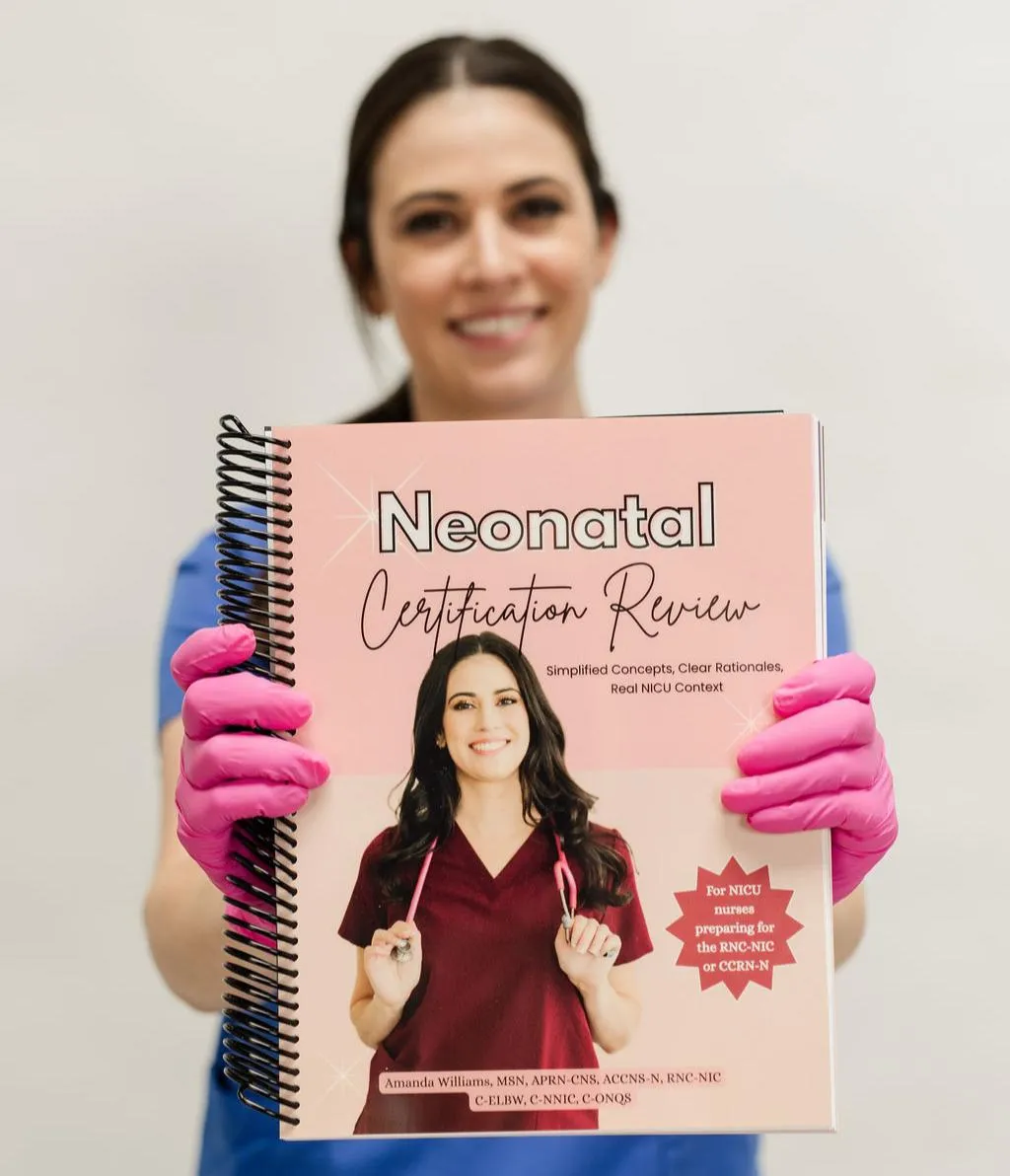
NEONATAL CERTIFICATION
REVIEW BOOK
📌 What’s Inside:
- 13 comprehensive chapters covering core NICU certification content
- Clear, organized breakdowns for fast recall
- Peer-reviewed to ensure clinical accuracy and depth
- Ideal for RNC-NIC or CCRN-N prep — or as a reference guide for NICU nurses at any level
- Plenty of space to write in and take notes
📚Table of Contents:
- Maternal Health & Birth History
- Intrauterine to Extrauterine Transition
- Neonatal Resuscitation
- Thermoregulation
- Neurologic System
- Respiratory System
- Oxygen, Ventilation, & Acid-Base Balance
- Cardiovascular System
- Nutrition & Feeding
- Hematopoietic System
- Infection & Immunology
- Professional Practice

Ready to kickstart your journey to becoming a certified NICU nurse?
Look no further!
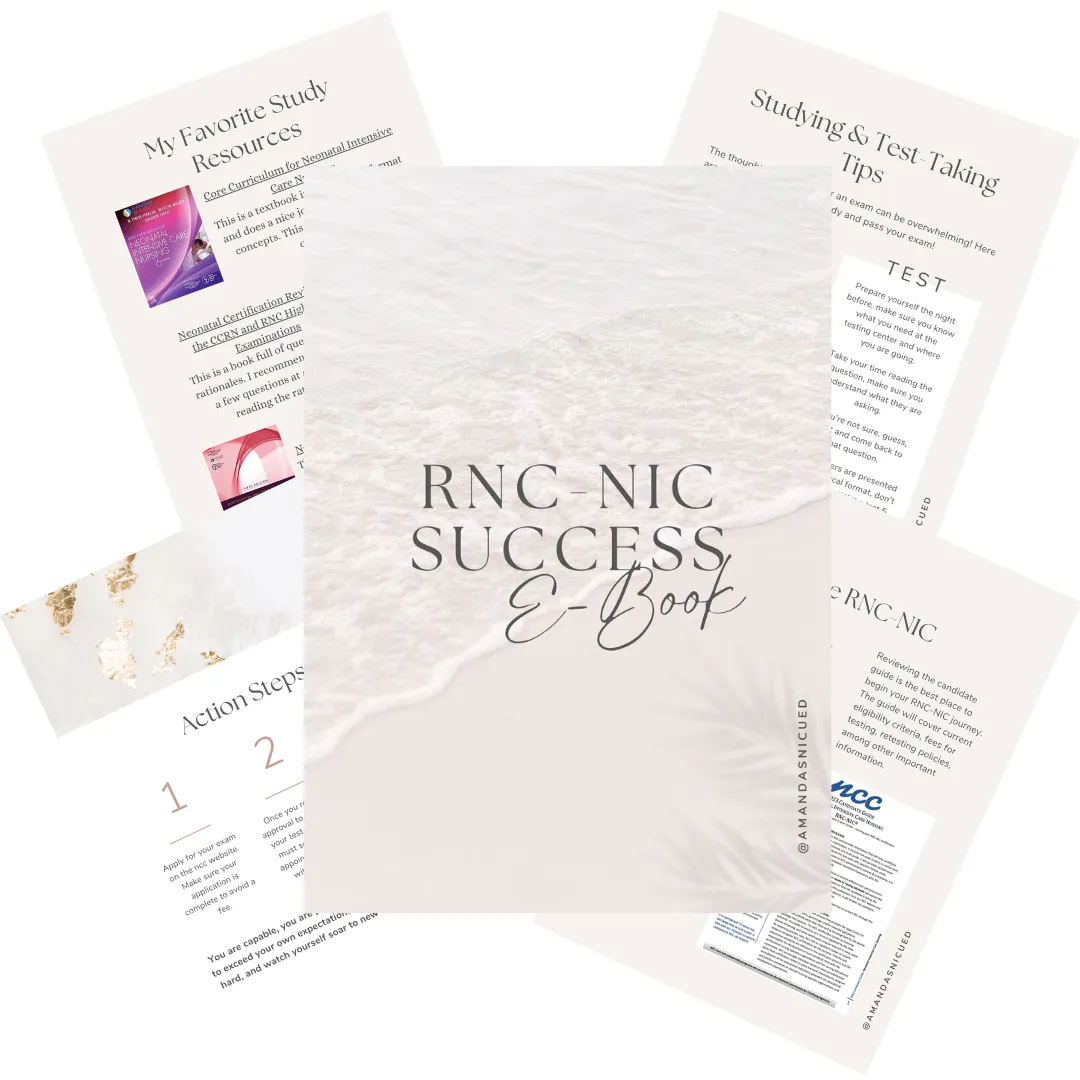
Grab my FREE E-Book packed with essential study and test-taking strategies for the RNC-NIC.
In the E-Book I give you the resources you need including the link to access the candidate guide, several types of books to study from, some of my favorite strategies, an outline of the content you should review, and a blank calendar for you to make your study plan!
Frequently Asked Questions About the RNC-NIC exam

What is the RNC-NIC?
The RNC-NIC is a competency-based exam that tests the specialty knowledge of nurses in the United States & Canada who care for critically ill newborns and their families.
The RNC-NICU is a nationally recognized certification that recognizes the registered nurse for their specialty knowledge and skill.

Who can take the RNC-NIC exam?
Nurses can take this exam after a minimum of two years experience in the NICU caring for critically ill newborns and their families.

Which books should I use?
I'm glad you asked! There are many excellent books to help you prepare for the RNC-NIC, I gathered ande describe each of them for you in my FREE e-book.
Is there a course to help me study?
Yes! Many hospitals host their own certification course and there are a few online courses. See my RNC-NIC test taking tips E Book for more information
What happens if I don't pass the exam?
If you don't pass the exam on your first try you can try again after 90 days. You will have to reapply after 90 days and pay a retest fee. There is no limit to the number of times you can take the exam (however a candidate can only sit for the exam twice per year).
Can I make more money if I take the RNC-NIC exam and get certified?
Yes! Many hospitals provide a raise or a bonus for nurses with specialty certifications. Hospitals also typically hire at a higher base salary when nurses have a certification.


Find me @amandasnicued on these channels or Email me
hey nurses don't miss out
© Copyright 2024. AmandasNICUEd. All rights reserved. | Terms & Conditions | Privacy Policy Contact: [email protected]