
Welcome to Amanda's NICU Education


Hi! My name is Amanda. I'm a NICU nurse, Clinical Nurse Specialist, NICU Educator... basically your NICU BFF. If you want to talk NICU, I'm here for you! I love everything about NICU nursing and I'm eager to learn and share my knowledge with all my NICU friends.
I have been a NICU nurse since 2009 I am currently a Clinical Nurse Specialist in a Level IV NICU in Los Angeles.
I am passionate about educating the next generation of NICU nurses. I share my knowledge through platforms such as Instagram and Facebook and am excited to have you here on my website!
Click on the button below to sign up for my newsletter filled with NICU education and tips for all experience levels.

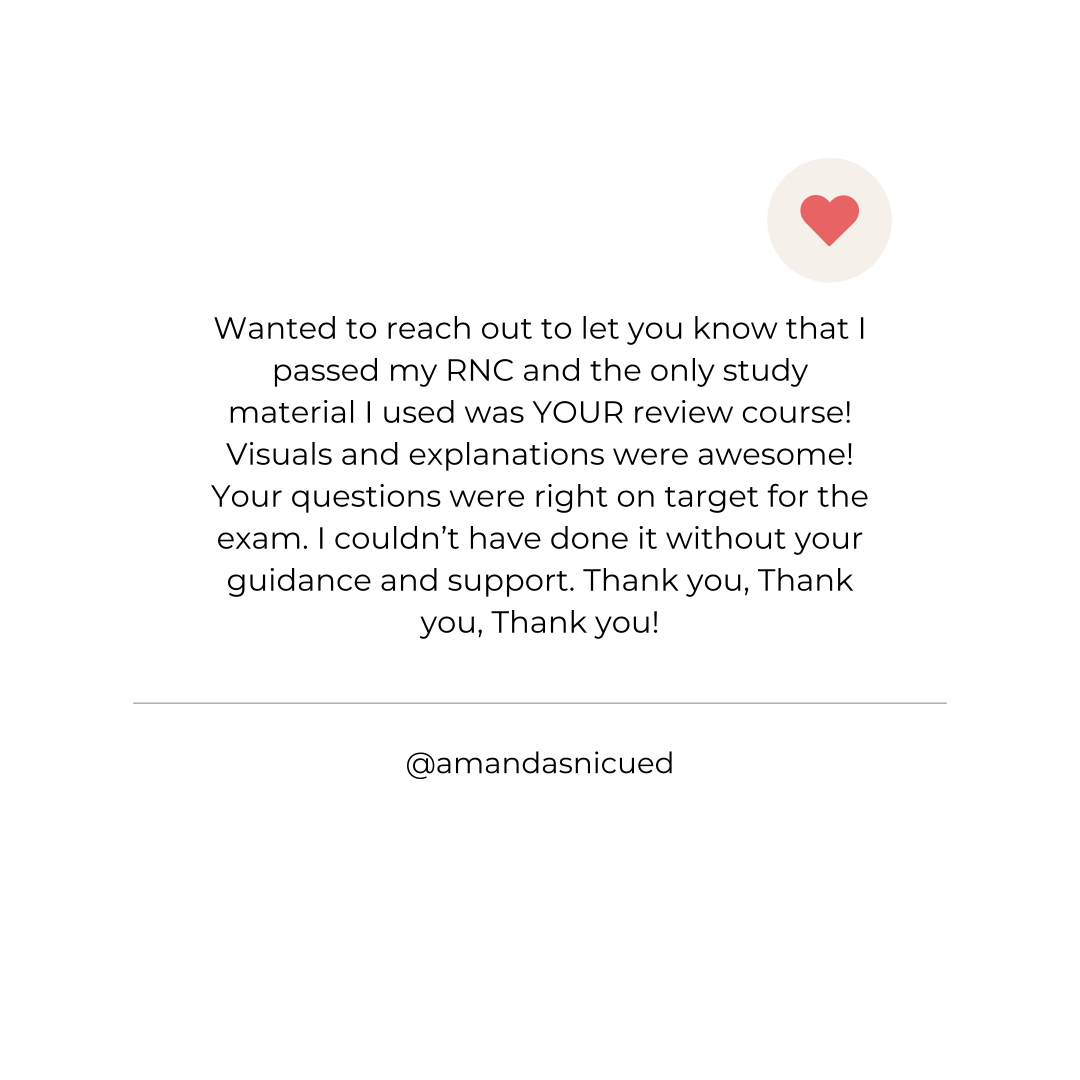
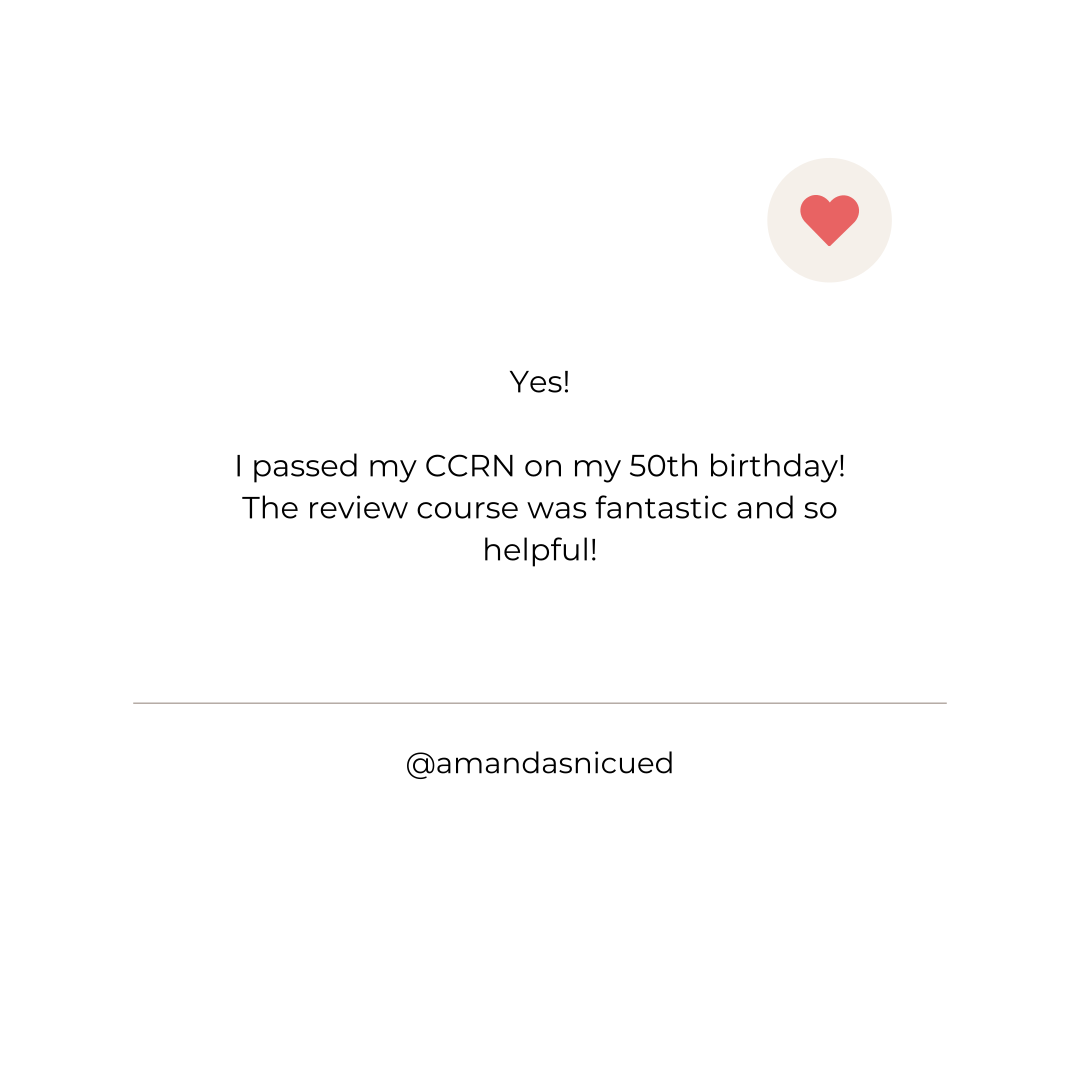
Not very many people love taking tests but as a self-acclaimed "forever student" who has taken (and passed) five different certification exams I am no longer afraid of tests! "Way to brag", you might be thinking but I want to help YOU pass your certification exam too!
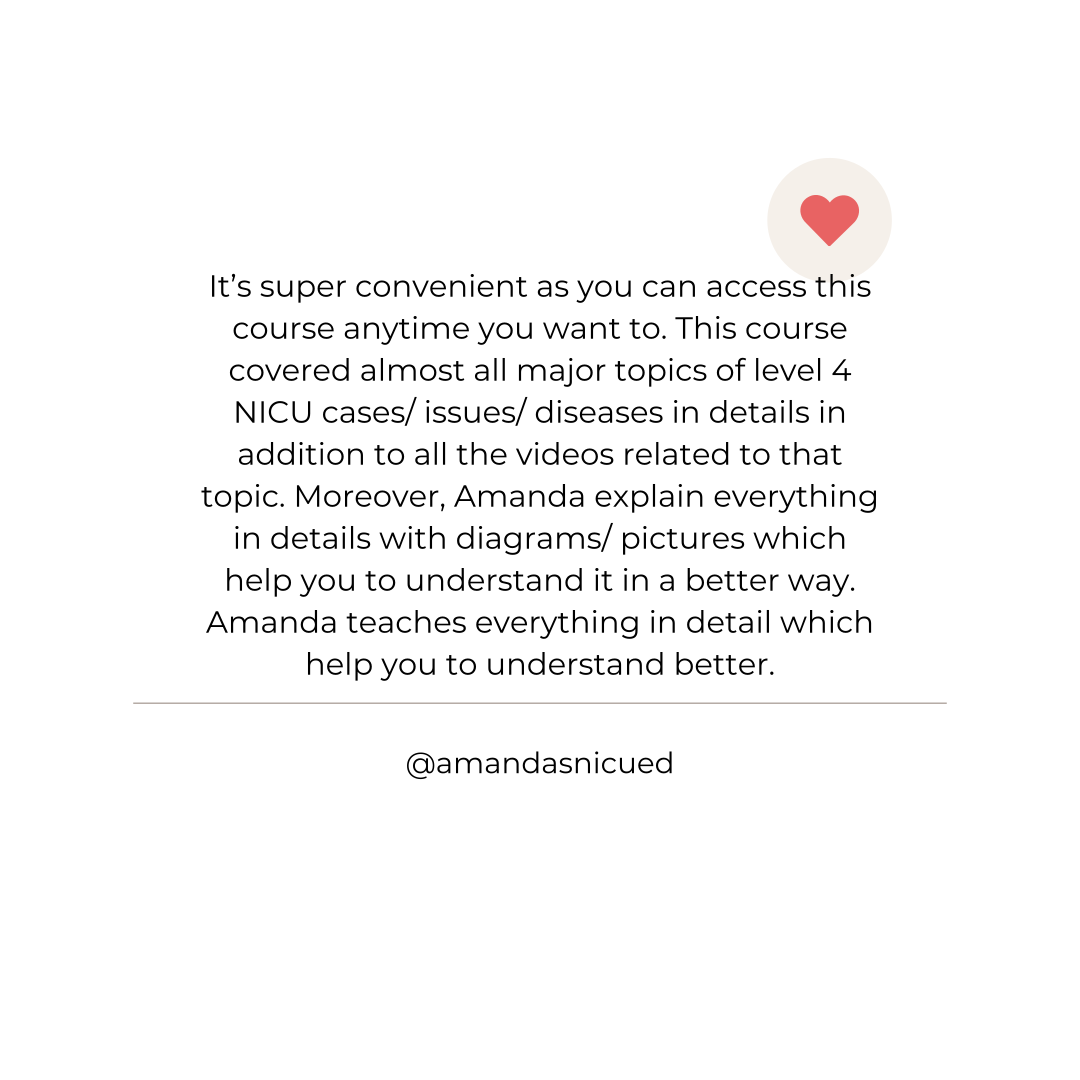
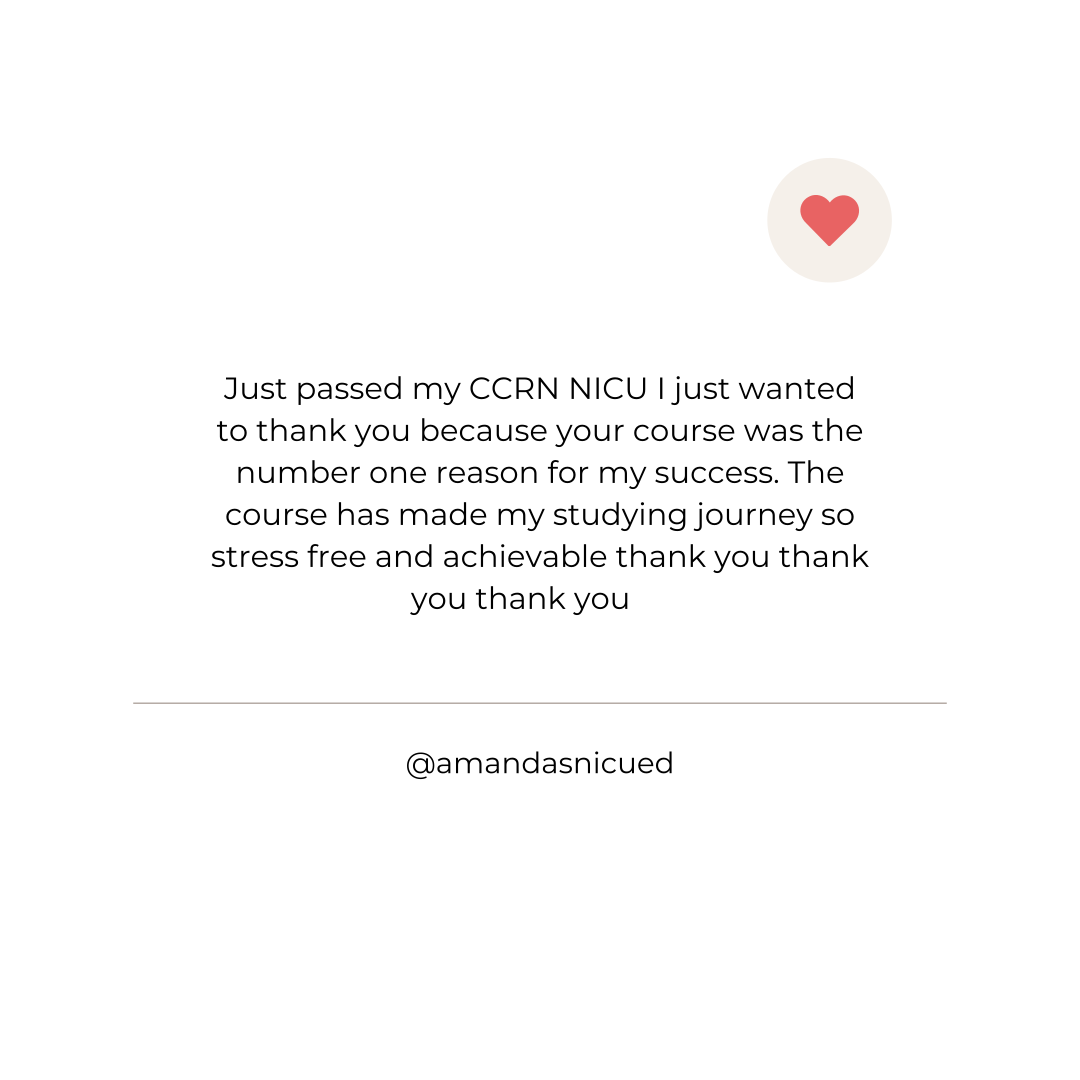
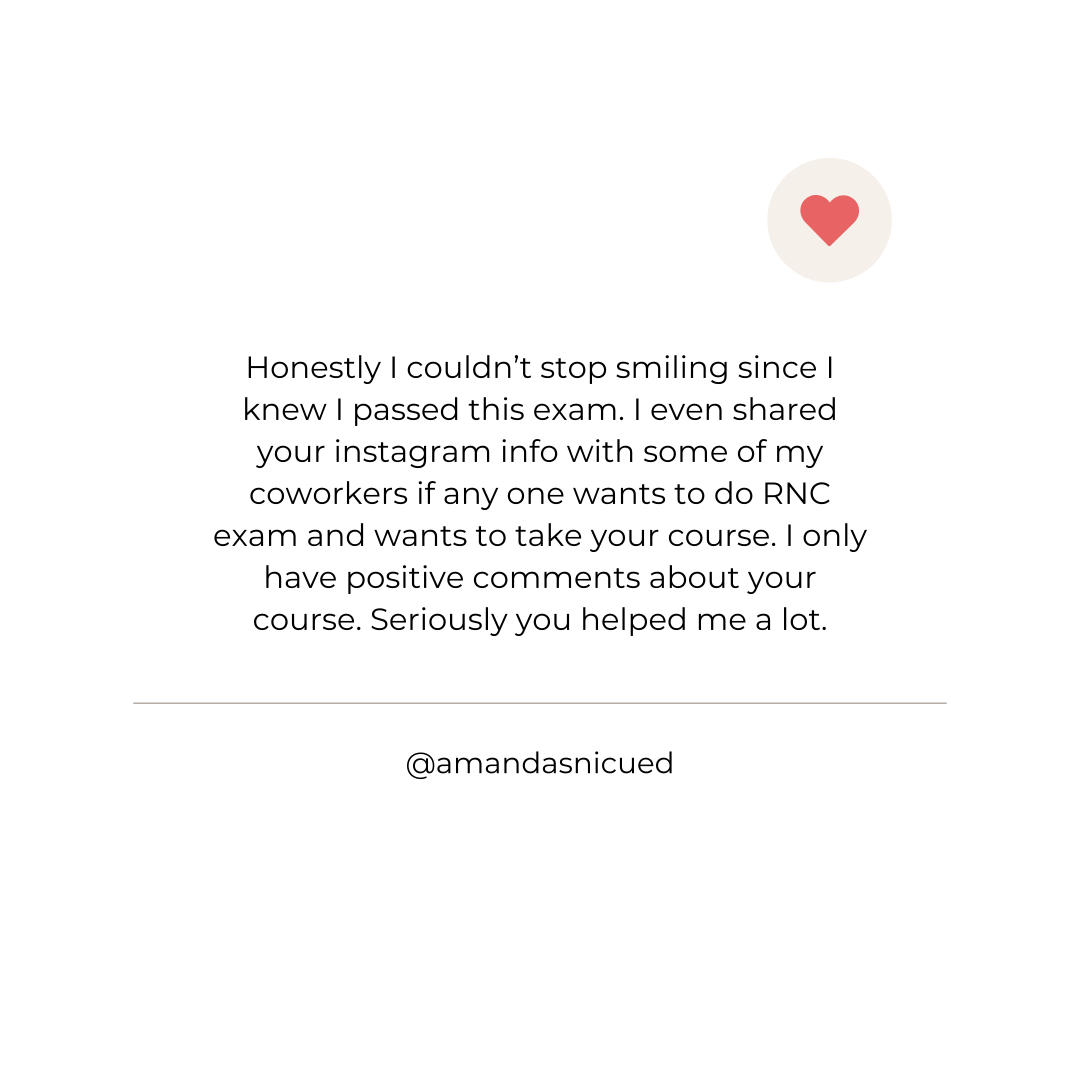
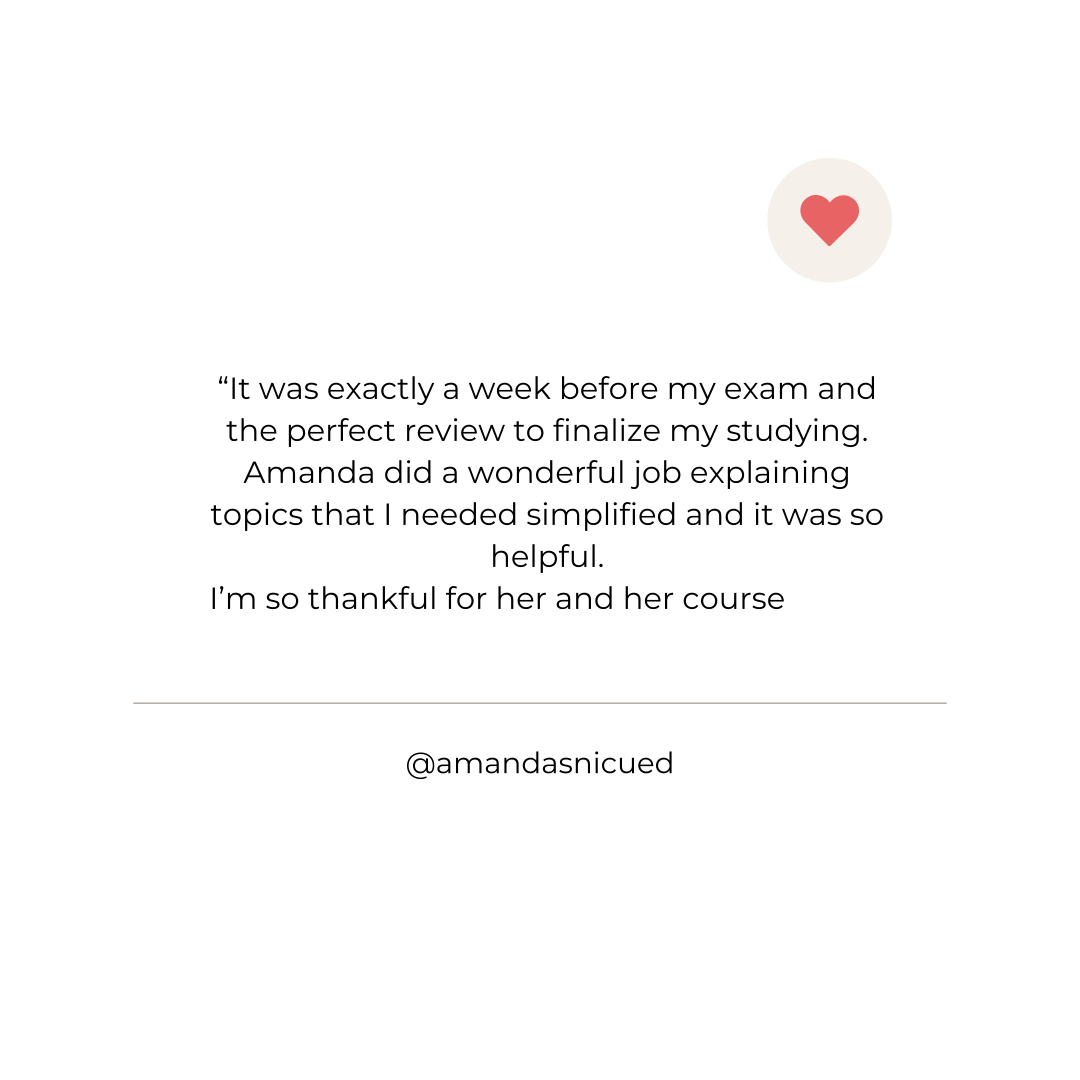
Introducing Amanda's RNC-NIC Success digital course - your ultimate study companion!
Gain unlimited, on-demand access for life, ensuring you're primed to ace your certification exam.
I'm here to help you succeed and I can't wait for you to share with me that you PASSED the RNC-NIC EXAM!!!


NICU Interview Tips: How to Prepare as a New Grad or NICU Nurse Leader
From New Grad to NICU Leader: How to Prepare for Your NICU Interview
NICU interviews can feel intimidating—and not because you aren’t capable.
They feel high-stakes because the NICU is high-stakes.
You’re stepping into a specialty where clinical reasoning, teamwork, emotional intelligence, and communication matter just as much as technical skill. Whether you’re interviewing as a new grad, a nurse transitioning into the NICU, or a seasoned nurse pursuing a leadership role, the interview is asking one core question:
Can this nurse think safely, work well with others, and grow within our unit?
This blog will walk you through how to prepare for a NICU interview with confidence (without memorizing scripts) so you can show interviewers how you think, not just what you know.
Why Listen to Me?

Before we dive in, a quick note in case you’re new here.
Hi! I'm Amanda, I’m a Neonatal Clinical Nurse Specialist, and I’ve been through more interviews than I can count—on both sides of the table. I’ve interviewed as a new grad, moved across the country and interviewed in California, interviewed for my CNS program, and promoted within my own NICU. I’ve also conducted interviews for new grads, nurses switching specialties, charge nurses, nurse leaders, and even physicians and specialists.
I know what interviewers are actually listening for and what truly makes a candidate stand out in the NICU.
Before we dive in, I created a NICU Interview Checklist based on years of interviewing NICU nurses and leaders. It’s a simple, effective way to prepare without overthinking your answers.
What NICU Interviewers Are Really Assessing
NICU interviewers are not looking for perfection or encyclopedic knowledge. They’re assessing:
Clinical reasoning – how you think through problems, not what you’ve memorized
Teamwork and communication – essential in high-acuity, multidisciplinary environments
Situational awareness and safety – recognizing subtle changes that matter
Emotional maturity and teachability – can you handle the emotional weight while staying open to learning?
Alignment with unit culture – will you strengthen the team dynamic?
This is true for bedside nurses and leadership roles. The lens simply shifts from individual practice to systems thinking.
Common NICU Interview Question Categories (and How to Prepare)
NICU interviews vary by hospital, but the question themes are surprisingly predictable. Instead of memorizing answers, prepare adaptable stories you can shape to different questions.
1. Teamwork & Collaboration
You may be asked:
Tell me about a time you worked through a challenging team dynamic
How do you communicate with providers or multidisciplinary teams?
Describe a time you advocated for a patient
How do you handle working with families in crisis?
Tell me about collaborating during a code or emergency
How to prepare:
Think of 1–2 stories where you:
Collaborated under pressure
Spoke up respectfully when something didn’t seem right
Supported a struggling teammate—or asked for help yourself
Navigated family dynamics with sensitivity
Contributed to patient safety through teamwork
Interviewers want to see how you function within a team—not as a solo performer.
2. Conflict & Communication
You may be asked:
Tell me about a conflict with a coworker
How do you handle disagreements about patient care?
Describe a time feedback was difficult to receive
How would you address a safety concern with a senior colleague?
What if a parent disagrees with the care plan?
Framework to use:
What was the situation?
How did you manage your emotions?
What communication strategies did you use?
How did you keep the focus on patient care and professionalism?
What did you learn?
NICU leaders value calm, reflective communicators who can navigate tension without defensiveness or avoidance.
3. Clinical Judgment & Patient Safety
You may be asked:
Describe a time you were concerned about a patient
What do you do when something doesn’t feel right?
How do you prioritize in an emergency?
Walk me through your assessment of a deteriorating neonate
How do you know when to escalate?
How to structure your thinking:
Recognition → Assessment → Escalation → Collaboration → Reflection
Emphasize:
Early identification of subtle changes (bradycardias, temperature instability, feeding intolerance)
Use of resources (policies, senior nurses, charge nurse)
Clear SBAR communication
Safety > speed > ego
Knowing when to ask for help is a strength in the NICU.
4. Stress, Growth, and Emotional Resilience
You may be asked:
How do you handle the emotional aspects of NICU nursing?
Tell me about a mistake or learning moment
How do you support yourself after a difficult shift?
Describe a time you experienced moral distress
How do you process infant loss?
Interviewers listen for:
Insight and accountability
Healthy coping strategies
Support systems
Willingness to reflect and grow
Professional boundaries paired with deep compassion
Avoid “I never get stressed.” or "My biggest problem is I work too hard". Emotional intelligence matters here.
5. NICU-Specific Scenario Questions
Be prepared for scenario-based questions like:
“A 24-weeker is having frequent desaturations. Walk me through your assessment.”
“Parents want to hold their intubated baby. How do you respond?”
“You notice a colleague not following hand hygiene. What do you do?”
“How would you explain CPAP to a parent?”
Key principles:
Think out loud—show your reasoning
Prioritize ABCs and safety
Include family-centered care
Demonstrate when you’d seek support
Show awareness of developmental care principles
Career-Stage Guidance: How to Position Yourself
New to the NICU (New Grad or Transitioning Nurse)
Interviewers expect:
Curiosity and humility
Strong foundations in assessment, communication, and safety
A growth mindset
Transferable skills from prior experience
Clear reasons for choosing the NICU
You don’t need NICU mastery. You need safe thinking and teachability. Show us that you are coachable.
Experienced Bedside NICU Nurse
They’re now looking for:
Pattern recognition
Anticipation of problems
Unit contribution beyond patient assignments
Mentorship potential
Quality-improvement mindset
Be ready to discuss how you support peers and elevate unit practice.
Charge Nurse, Leadership, or APRN Path
This is where the mindset shifts.
Leadership interviews assess:
Situational awareness beyond one patient
Supporting others under stress
Decision-making with incomplete information
Emotional regulation and influence
Systems thinking and change management
Strong candidates show they can lead without needing authority.
Your NICU Interview Preparation Strategy
Instead of rehearsing answers, prepare 6–8 adaptable stories that touch on:
Teamwork under pressure
Conflict resolution
Patient or family advocacy
Clinical concern you identified
Learning from feedback or mistakes
Stress or resilience
Leadership or initiative
Cultural sensitivity or challenging family dynamics
Use the STAR+ framework:
Situation → Task → Action → Result → Reflection/Growth
This allows you to answer confidently—even when questions catch you off guard.
Questions You Should Ask in a NICU Interview
You’re interviewing them too.
For any role:
What does orientation look like for this position?
How does the unit support continuing education?
What are the nurse-to-patient ratios by acuity?
How are ethical dilemmas handled?
What developmental care practices are prioritized?
For leadership roles:
What challenges is the unit currently facing?
How would you describe the unit culture?
How is success measured in this role?
How does leadership support staff wellbeing and retention?
Day-of-Interview Tips
Practical:
Bring extra resumes
Have references ready
Research the NICU level and specialties
Dress professionally (when in doubt, overdress)
Arrive early
Mental:
Review your stories—not scripts
Practice grounding breaths
Remember: they already see potential in you
Authenticity always reads stronger than perfection
Red Flags to Watch For
Pay attention to:
Negative talk about staff
Unclear orientation processes
Evasive answers about ratios or support
No mention of professional development
High turnover hints
Lack of enthusiasm from interviewers
Final Thoughts
NICU interviews aren’t about proving you’re perfect.
They’re about showing that you are safe, thoughtful, collaborative, and ready to grow.
Those qualities can’t be faked—and you already have more of them than you may think.
The NICU needs nurses at every stage:
New grads bring fresh perspective
Experienced nurses bring wisdom
Emerging leaders bring vision
Trust your preparation. Trust your instincts. And trust that the right unit will recognize your potential.
Want a simple way to prepare?
Download my NICU Interview Checklist—a practical guide to organizing your stories, mindset, and preparation so you can walk into your interview confident and grounded.

December 2023 Certification Review Webinar
NICU Certification Review
Ready to kickstart your journey to becoming a certified NICU nurse?
Look no further!
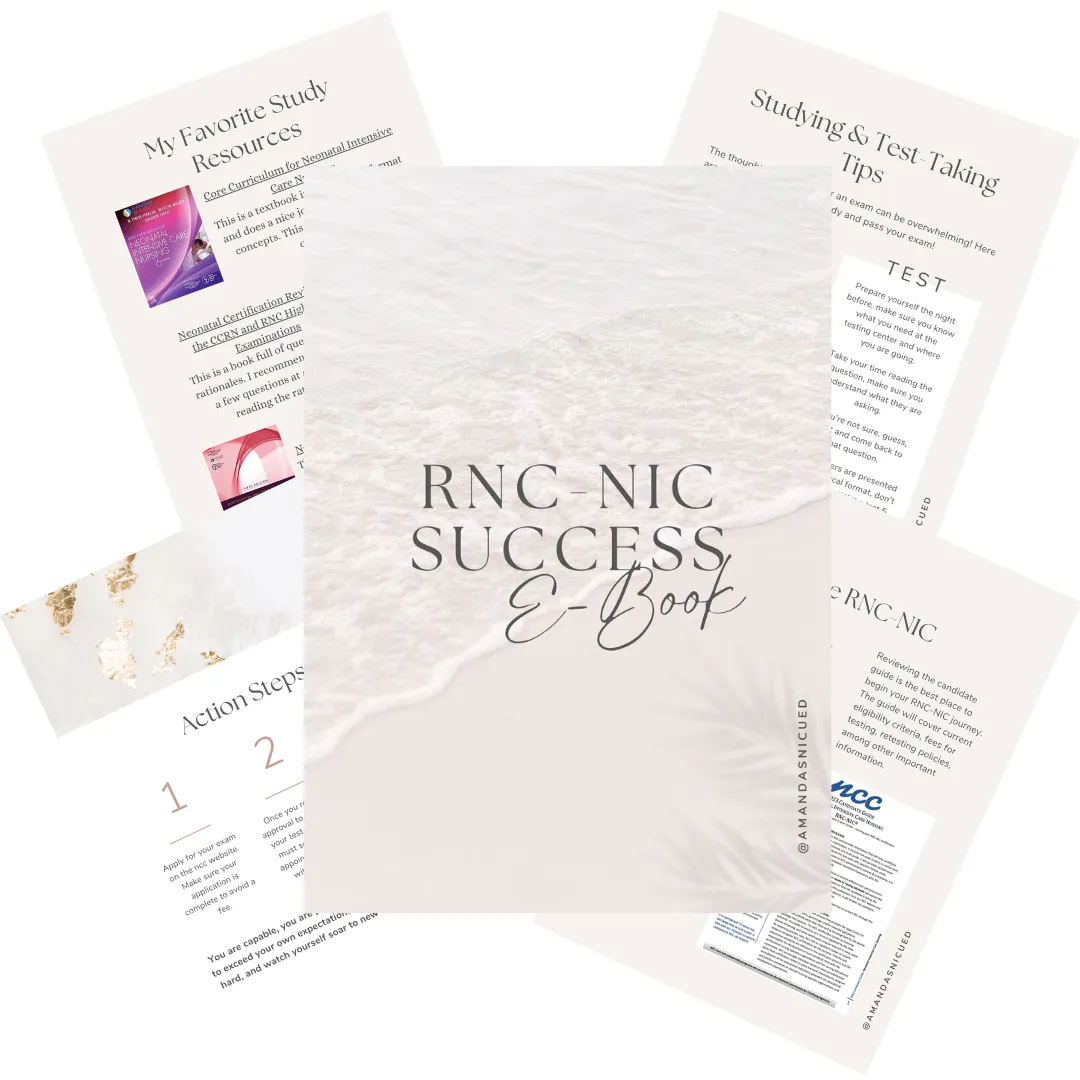
Grab my FREE E-Book packed with essential study and test-taking strategies for the RNC-NIC.
In the E-Book I give you the resources you need including the link to access the candidate guide, several types of books to study from, some of my favorite strategies, an outline of the content you should review, and a blank calendar for you to make your study plan!
Frequently Asked Questions About the RNC-NIC exam

What is the RNC-NIC?
The RNC-NIC is a competency-based exam that tests the specialty knowledge of nurses in the United States & Canada who care for critically ill newborns and their families.
The RNC-NICU is a nationally recognized certification that recognizes the registered nurse for their specialty knowledge and skill.
Who can take the RNC-NIC exam?
Nurses can take this exam after a minimum of two years experience in the NICU caring for critically ill newborns and their families.

Which books should I use?
I'm glad you asked! There are many excellent books to help you prepare for the RNC-NIC, I gathered ande describe each of them for you in my FREE e-book.
Is there a course to help me study?
Yes! Many hospitals host their own certification course and there are a few online courses. See my RNC-NIC test taking tips E Book for more information
What happens if I don't pass the exam?
If you don't pass the exam on your first try you can try again after 90 days. You will have to reapply after 90 days and pay a retest fee. There is no limit to the number of times you can take the exam (however a candidate can only sit for the exam twice per year).
Can I make more money if I take the RNC-NIC exam and get certified?
Yes! Many hospitals provide a raise or a bonus for nurses with specialty certifications. Hospitals also typically hire at a higher base salary when nurses have a certification.

Find me @amandasnicued on these channels or Email me
hey nurses don't miss out
© Copyright 2024. AmandasNICUEd. All rights reserved. | Terms & Conditions | Privacy Policy Contact: [email protected]